
 24°
Lula Says He Wants to Turn Brazil Into a Developed Country Within Four Years
Speaking at a National Energy Policy Council meeting, the president highlighted opportunities in renewable energy, critical minerals and data centers, while defending fiscal responsibility and social investment.
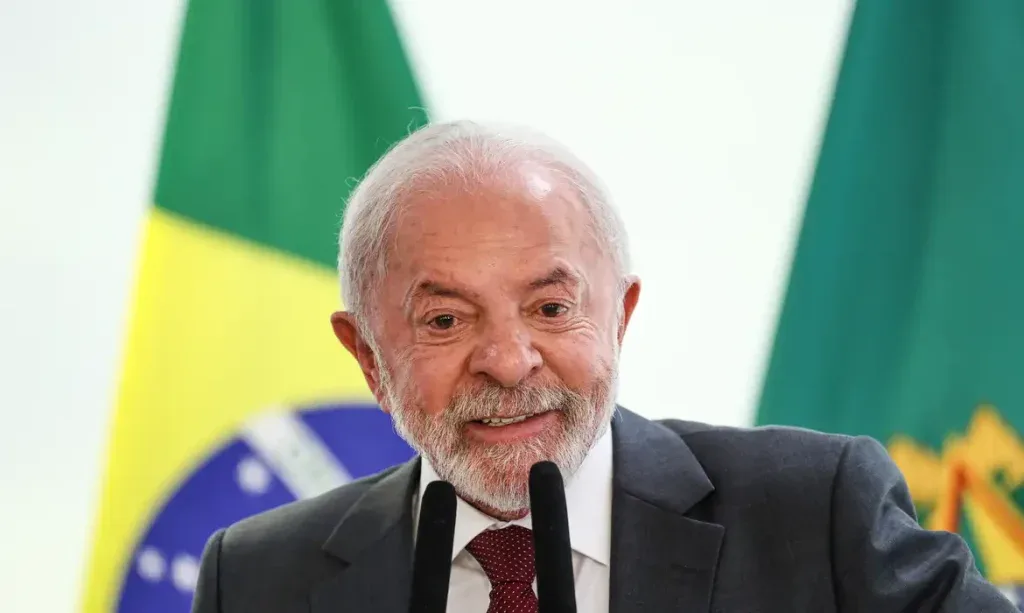
Brazilian President Luiz Inácio Lula da Silva said Friday (November 6) that he wants to transform Brazil from a developing nation into a developed country within the next four years.
Lula described the country's economic prospects as “extraordinary,” particularly in renewable energy, critical minerals and rare earth elements, which he believes could attract significant productive investment.
“I want, in just four years, to move Brazil from the status of a developing country to that of a developed country,” Lula said during a meeting of the National Energy Policy Council (CNPE).
The president argued that Brazil must take advantage of its competitive strengths to accelerate economic and social development.
He also pointed to progress on the country's energy transition roadmap as evidence that goals once considered unrealistic can be achieved through political commitment and coordination.
“You know that the word impossible does not exist in my life,” he said, recalling resistance from oil-producing countries to the proposal during COP30. According to Lula, Brazil's diplomatic efforts helped move the initiative forward.
The document provides guidance for implementing climate commitments, including the transition away from fossil fuels and efforts to reverse deforestation and forest degradation.
Clean Energy and Data Centers
Lula also emphasized the potential for investment in clean energy. Addressing growing international interest in data centers, he said the government wants to attract these projects but will require companies to generate the electricity they consume.
“Those who come here to invest must build their own energy generation capacity. The electricity paid for by the Brazilian people will not be used to power data centers,” he said.
The president argued that Brazil is experiencing an exceptional moment, with few countries offering comparable prospects in the short, medium and long term.
He linked the country's economic future to clean energy production, data center investments and adding value to its natural resources.
Congressional Support
Lula credited his administration's political negotiations for securing major legislative achievements, even without a reliable majority in the National Congress.
“We achieved all this success in a Congress that was theoretically opposed to us,” he said.
He attributed the government's progress to negotiation skills, persuasion and the ability to build political agreements.
Fiscal Responsibility and Social Spending
Addressing public finances, Lula said he took office with a fiscal deficit equivalent to 2.8% of gross domestic product (GDP) and argued that his administration has since improved the country's budget position.
He pledged to maintain fiscal responsibility alongside social responsibility, insisting that efforts to balance public accounts would not come at the expense of low-income Brazilians.
“The poor will not pay the price. We will not force poor people to make sacrifices,” he said.
Lula also defended borrowing to finance major infrastructure projects, arguing that debt can be justified when it creates lasting assets and the government has the capacity to repay it.
“Nobody can spend more than they have. But if we want to build a new asset, we can take on debt to create something valuable for the country, such as a railway, a highway, a bridge or an airport,” he said.
For the president, combining fiscal discipline, productive investment, the energy transition and social policies represents a historic opportunity to accelerate Brazil's development.
Add a stronger news-focused opening




Comentários (0)
É necessário ter um cadastro de leitor para comentar.
Ainda não há comentários publicados. Seja o primeiro a participar.